Separate detection from identification
A camera may show that an area is warm without separating the individual parts within it. Locating a warm cluster, identifying a component and measuring its peak surface temperature are different tasks.
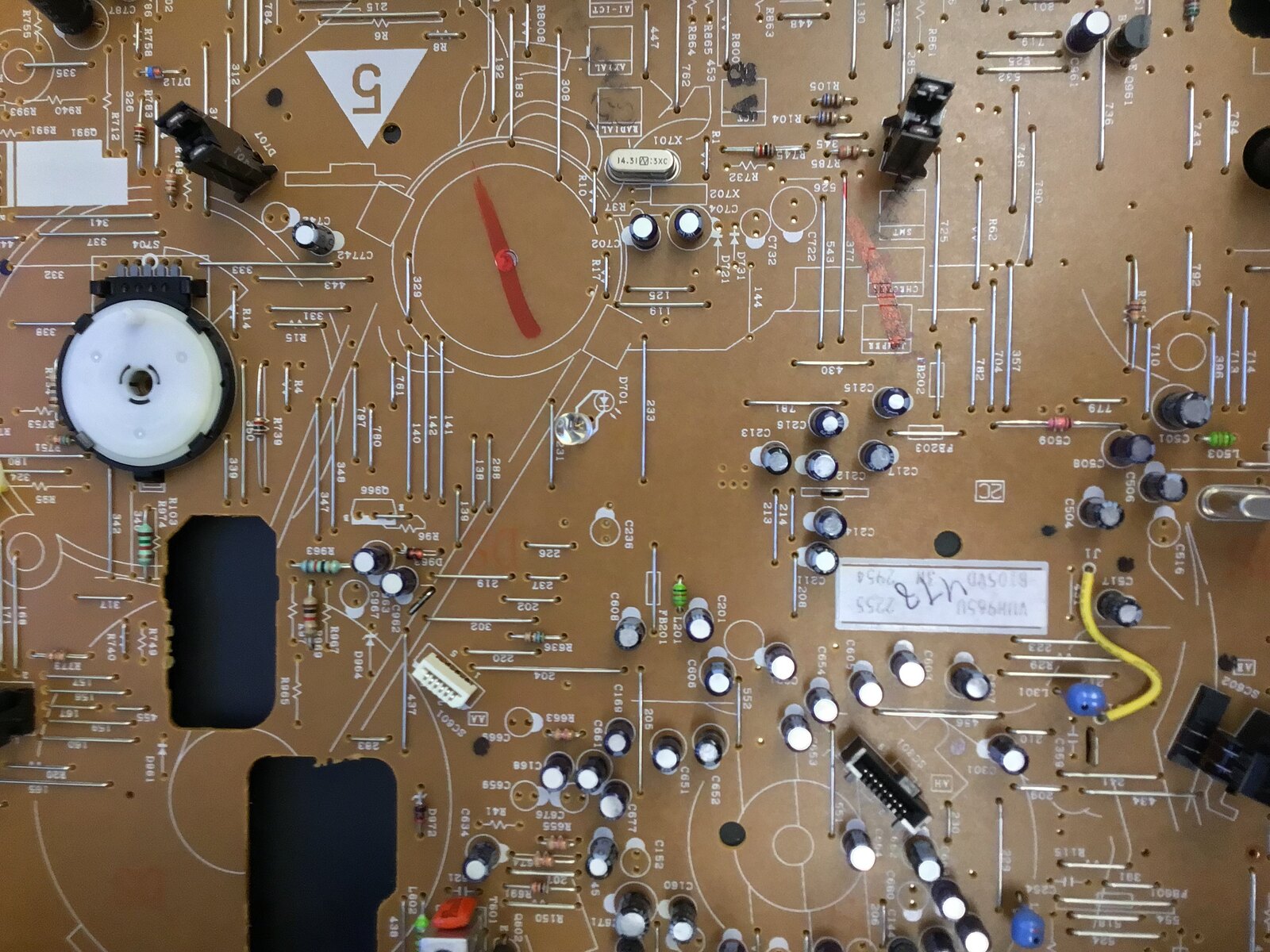
At close range, a fixed-focus lens may leave a board blurred. Moving farther away restores focus but makes each component occupy fewer pixels. A macro accessory or adjustable-focus lens changes that trade-off, rather than simply adding more pixels.
Look at working distance and depth of field
SDG's P2 Pro review describes a much closer working distance with its macro lens than with the bare camera, alongside a shallow depth of field. These are observations from that review, not a promise for every unit or attachment.
Gough's P3 and TS001 articles compare practical focus and field-of-view differences on real targets. Look for a board in focus across the region you need, enough clearance for probes and a position that can be held steadily.
Make the board comparison repeatable
Start with a known, low-voltage board and a controlled power supply. Keep the load, time after power-on and airflow consistent. Match the palette and temperature scale if comparing cameras, and photograph the component locations in visible light.
An overlay can help you navigate, but close-range parallax may shift the visible and thermal images apart. Confirm component positions from the board itself rather than trusting the blended outline.
- Record supply voltage, current limit, load and elapsed time.
- Keep camera distance, focus and viewing angle consistent.
- Use a stable stand for close-focus work.
- Keep the original file and a labelled visible photograph.
- Confirm the suspected fault with electrical measurements.
A hotspot is a clue, not the verdict
A regulator or power transistor may be warm because it is doing its intended job. A thermal pattern alone does not prove a short, a damaged component or an unsafe condition.
Compare with expected operation and, where available, a known-good board. Recheck with appropriate electrical measurements. Mains-powered equipment introduces hazards beyond the camera: this low-voltage workflow is not an instruction to work on exposed live circuits.
Sources & evidence
External PCB demonstrations and author comparisons inform this guide. We have not tested these cameras or confirmed a board fault. Published working distances depend on the reviewed configuration.
- SDG Electronics: InfiRay P2 Pro PCB inspectionExternal author’s report
- Gough: TOPDON TS001 adjustable-focus reviewExternal author’s report
- Gough: Thermal Master P3 reviewExternal author’s report
This guide is based on published sources. We have not conducted the equipment or property tests described by other authors. Statements about compatibility and performance remain scoped to their recorded versions and conditions.
How we use evidence