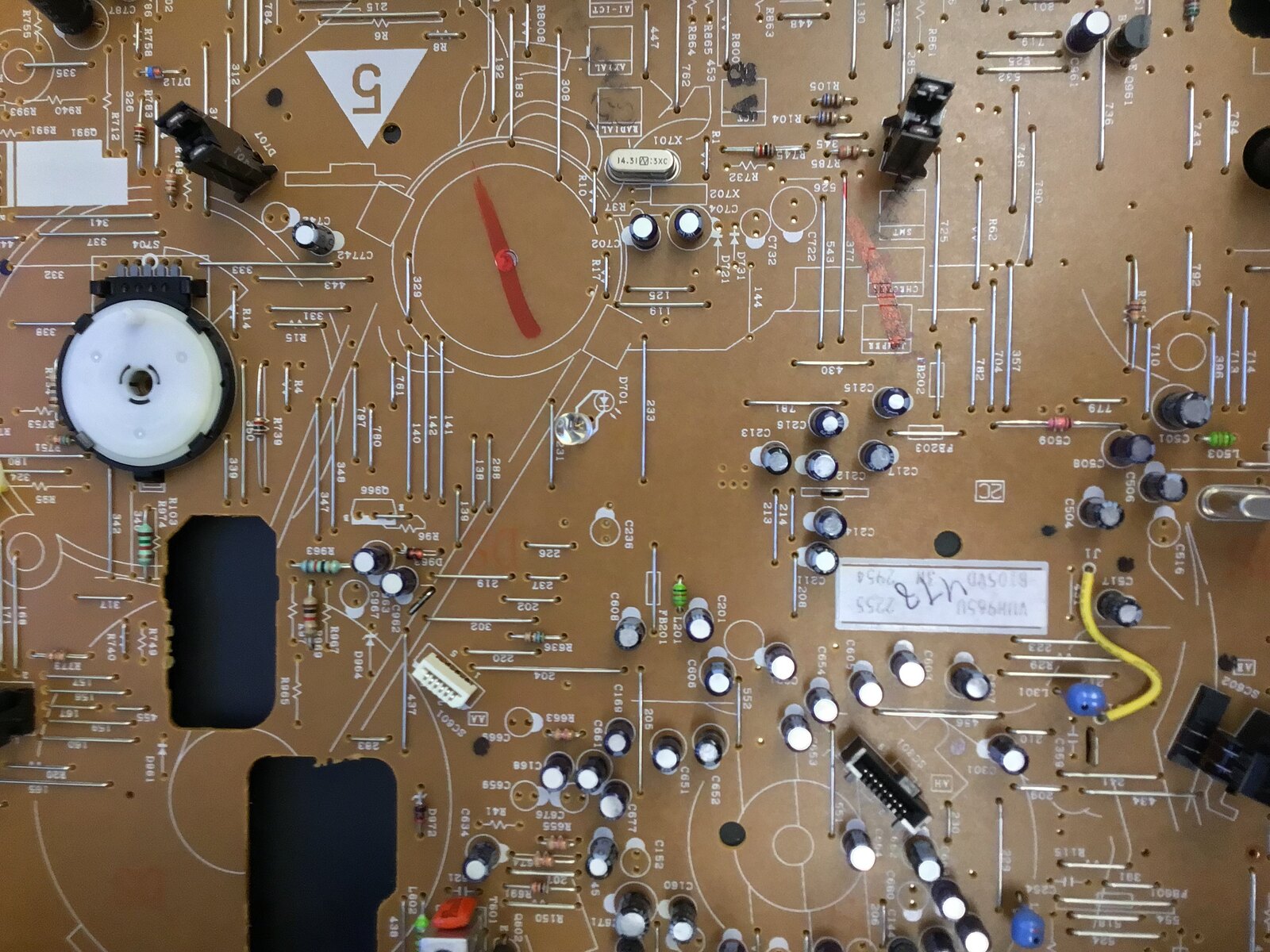
Warm equipment can be operating normally
Power conversion and electrical resistance generate heat in normal operation. A component that appears warm may be functioning as intended; a problem may also be invisible under a light load.
Record the operating condition before interpreting the image. Which parts are active? How long has the equipment been running? Is a fan operating? Are comparable components carrying comparable loads?
Separate a PCB exercise from a mains inspection
SDG's TC001 review demonstrates thermal observations on populated boards and other equipment. Those examples are useful for understanding the camera's workflow, but do not establish that every reader can safely access energised equipment.
UKTA's guidance for professional electrical thermography excludes phone-based clip-on and unsuitable fixed-focus devices from that professional task. A useful phone camera on a low-voltage repair bench is not therefore an equivalent professional electrical-survey instrument.
A consumer-unit or other mains inspection should be carried out by a competent person using an appropriate procedure. Do not remove covers or approach live parts to obtain a more attractive thermal image. HSE's workplace guidance explains the strict conditions on work near exposed live conductors. A camera is not an electrical safety test.
Build a record that another person can interpret
A useful image includes enough scene context to identify the equipment and the operating state. Reflections from metal, limited target coverage and the choice of temperature scale can all affect what appears concerning.
Where comparisons are valid, record the load and compare equivalent parts under equivalent conditions. Preserve the original file and a visible photograph, together with the time and distance.
- Equipment identification and relevant operating load.
- Elapsed running time, airflow and ambient conditions.
- Camera settings, target size, distance and surface finish.
- A visible photograph and the original thermal file.
- The electrical checks needed to confirm or reject the suspected fault.
Let the follow-up evidence decide
Thermal inspection can help prioritise a further investigation. It cannot on its own prove a loose connection, a failed semiconductor or the absence of an electrical hazard.
IRINFO's field cases also show that different spatial resolutions can produce different apparent peak temperatures on small targets. Avoid adopting a universal danger threshold from a picture without the equipment, loading and measurement context.
Sources & evidence
A general interpretation guide using external equipment examples. IRINFO's spatial-resolution case study has ITC/FLIR author affiliations and is not an independent brand comparison. We have not inspected an electrical installation, confirmed a fault or assessed compliance with UK electrical requirements.
- SDG Electronics: TOPDON TC001 review and testExternal author’s report
- IRINFO: Spatial-resolution cases with ITC/FLIR author affiliationsProfessional guidance
- The DIY Life: Controlled thermal observations of a Pi clusterExternal author’s report
- UKTA: Electrical thermography guidance for practitionersProfessional guidance
- HSE: Safety in electrical testing at workProfessional guidance
This guide is based on published sources. We have not conducted the equipment or property tests described by other authors. Statements about compatibility and performance remain scoped to their recorded versions and conditions.
How we use evidence