 ThermalNote
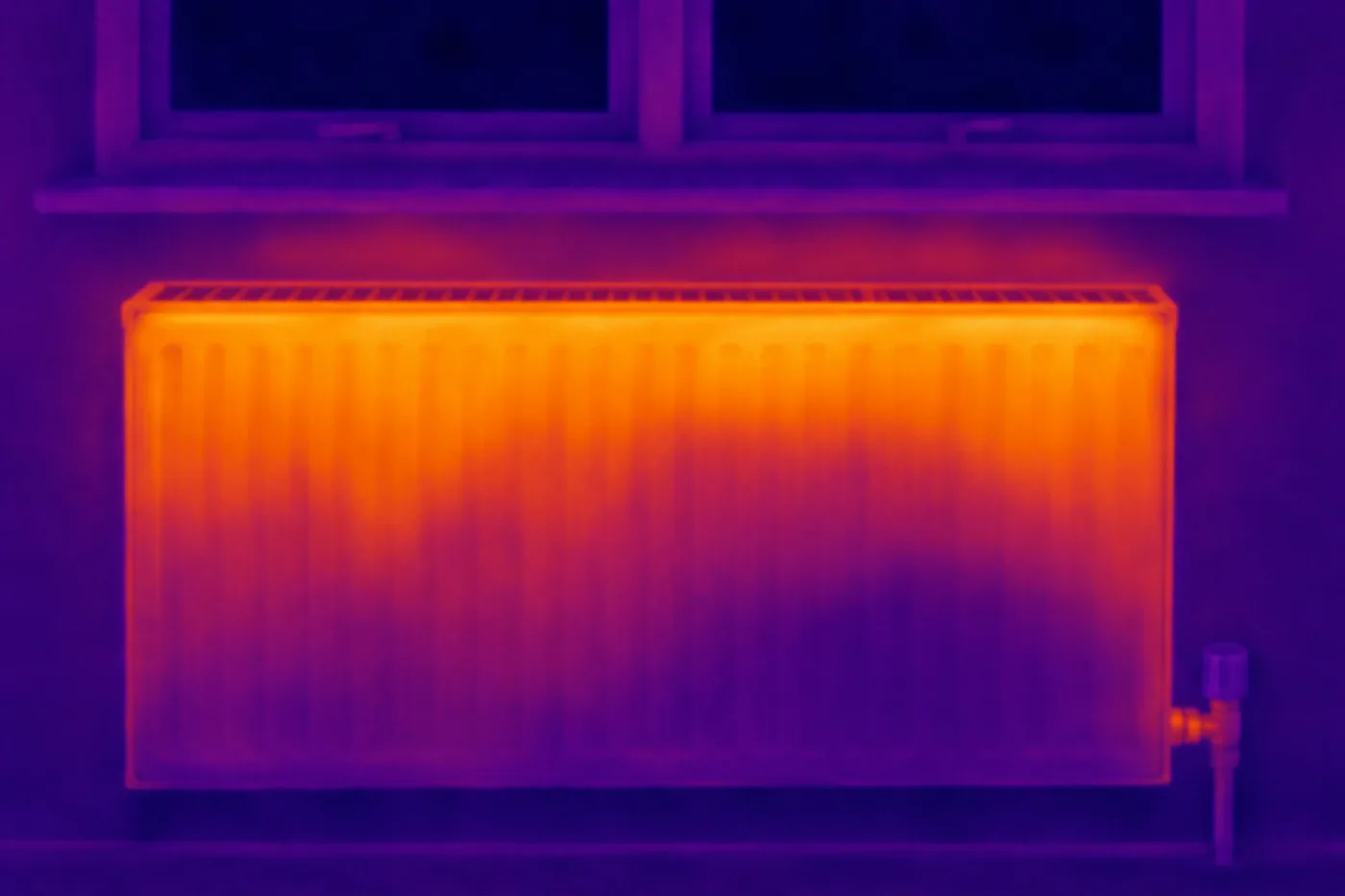
A radiator surface warms unevenly when the system starts. Compare at the same stage of a heating cycle and use a similar radiator as a reference. A repeatable pattern and the room’s symptoms are useful records for a heating engineer.
In this article
Write down what the heating was doing
Record when the heating came on, the room and whether the radiator was expected to heat. Set a time for the first and second observations or wait for a comparable steady stage. Write down what was observed, such as the right side staying cooler or the room taking longer to warm. Include whether the rest of the home felt affected. Start on the normal external surfaces of the device.
Compare the pattern without leaning on colour
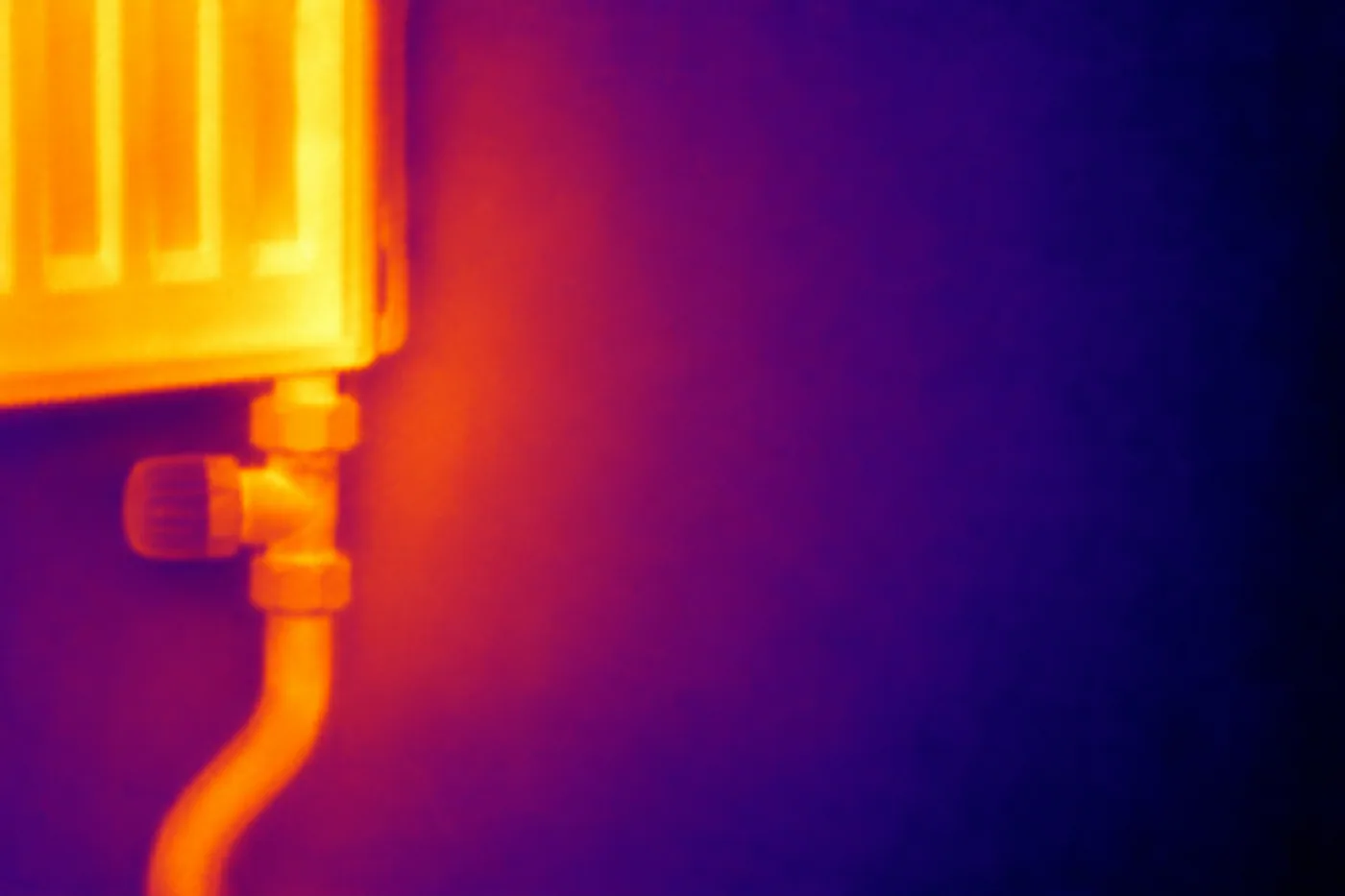
Photograph the same painted area at a similar angle on both radiators. Keep the whole panel in frame before checking a small patch. If the camera automatically changes its scale, record the scale or lock a common scale if available. Reflections on shiny valves or pipework can distort an infrared temperature. For an actual flow and return measurement, use a suitable method for the exposed pipes and the system design. Save the surface check separately.
Pass on a short, specific handover
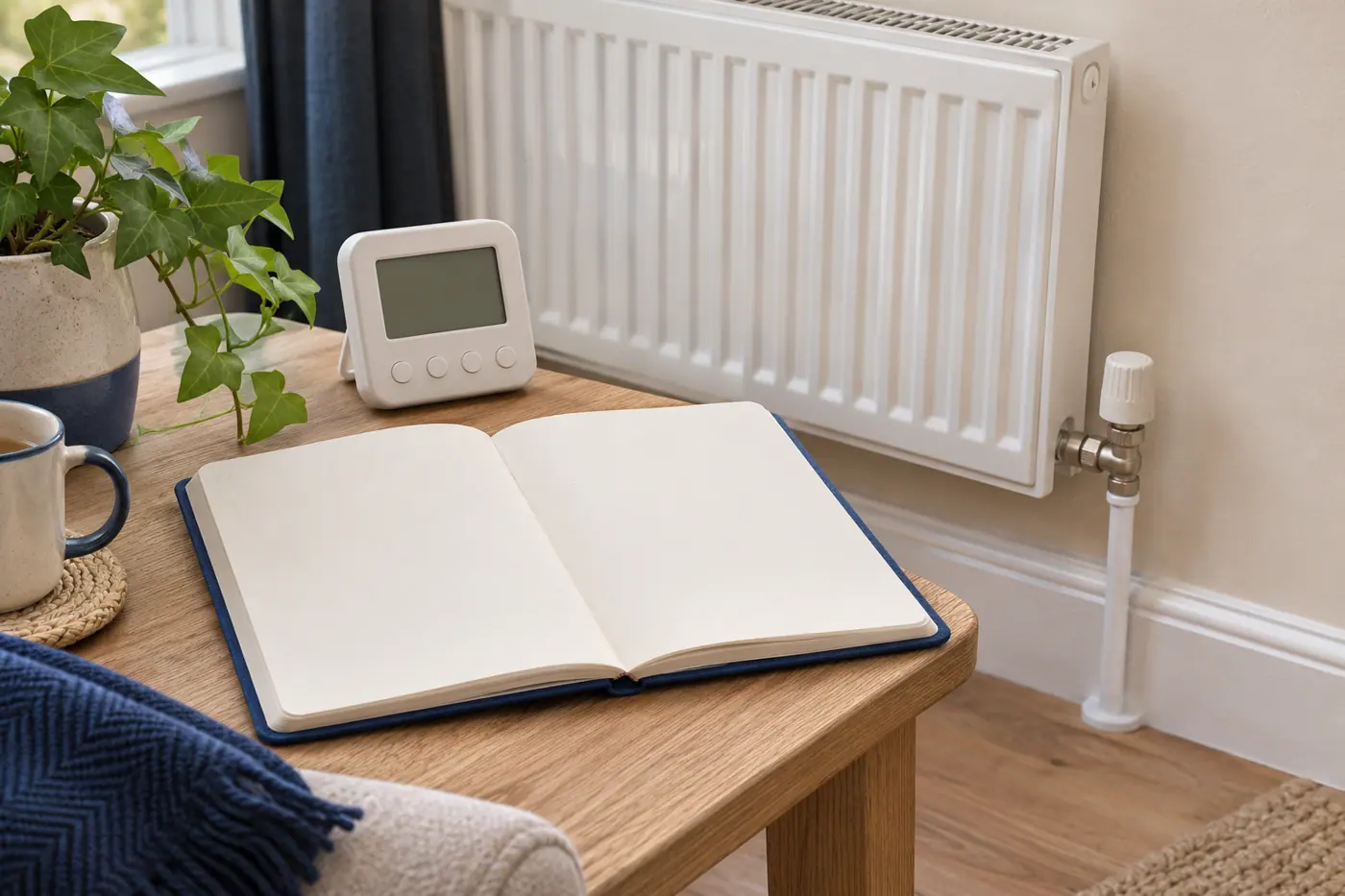
A useful note might say “Living-room panel was cooler at the far end 20 minutes after heating started. The equivalent panel in the front room had warmed across under the same conditions.” The timing is illustrative. Use a comparable heating stage in the actual rooms. Add ordinary and thermal photographs, which other radiators were affected, and any observed pressure trend. With leaks, pressure changes or doubts about the heating system, arrange the appropriate engineer’s check.
Questions about radiator thermal images
Does a cold area tell me there is trapped air?
Air, water flow, internal restrictions and the heating phase can produce different patterns. Repeat the observation and share the system symptoms for diagnosis.
Could two radiators look different just because of timing?
Yes. Compare the same stage of the cycle or repeat at steady conditions. Note controls and other known operating differences.
Should I use one standard flow and return temperature difference?
Use the design and measurement method for your own heating system. Thermograms of shiny fittings are a poor basis for setting a universal value.