 ThermalNote
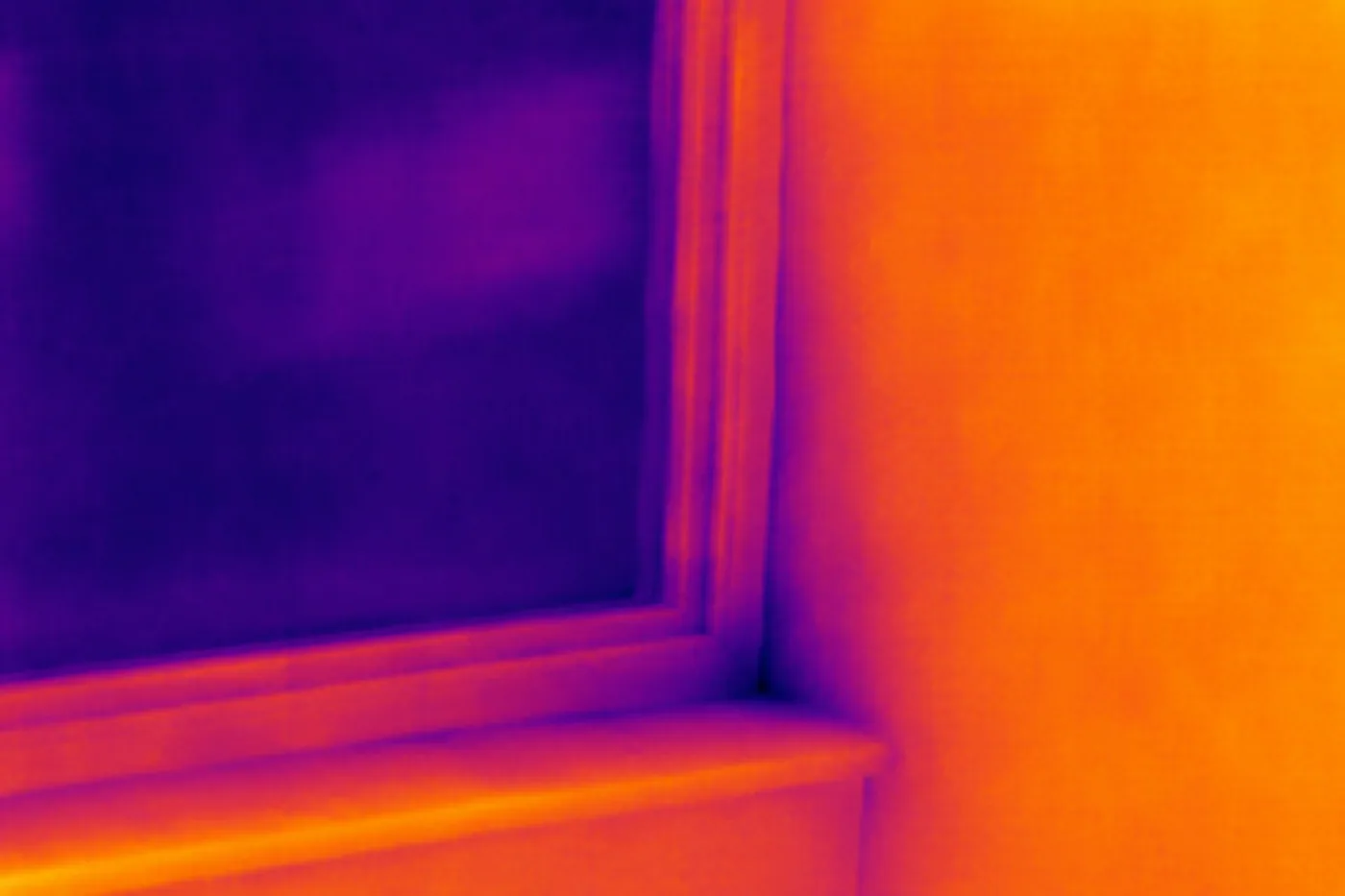
Measure the room air temperature and relative humidity at the same time. Compare the calculated dew point with a reliable temperature taken at the surface you are checking. The difference applies to that place and time.
In this article
Start with three readings
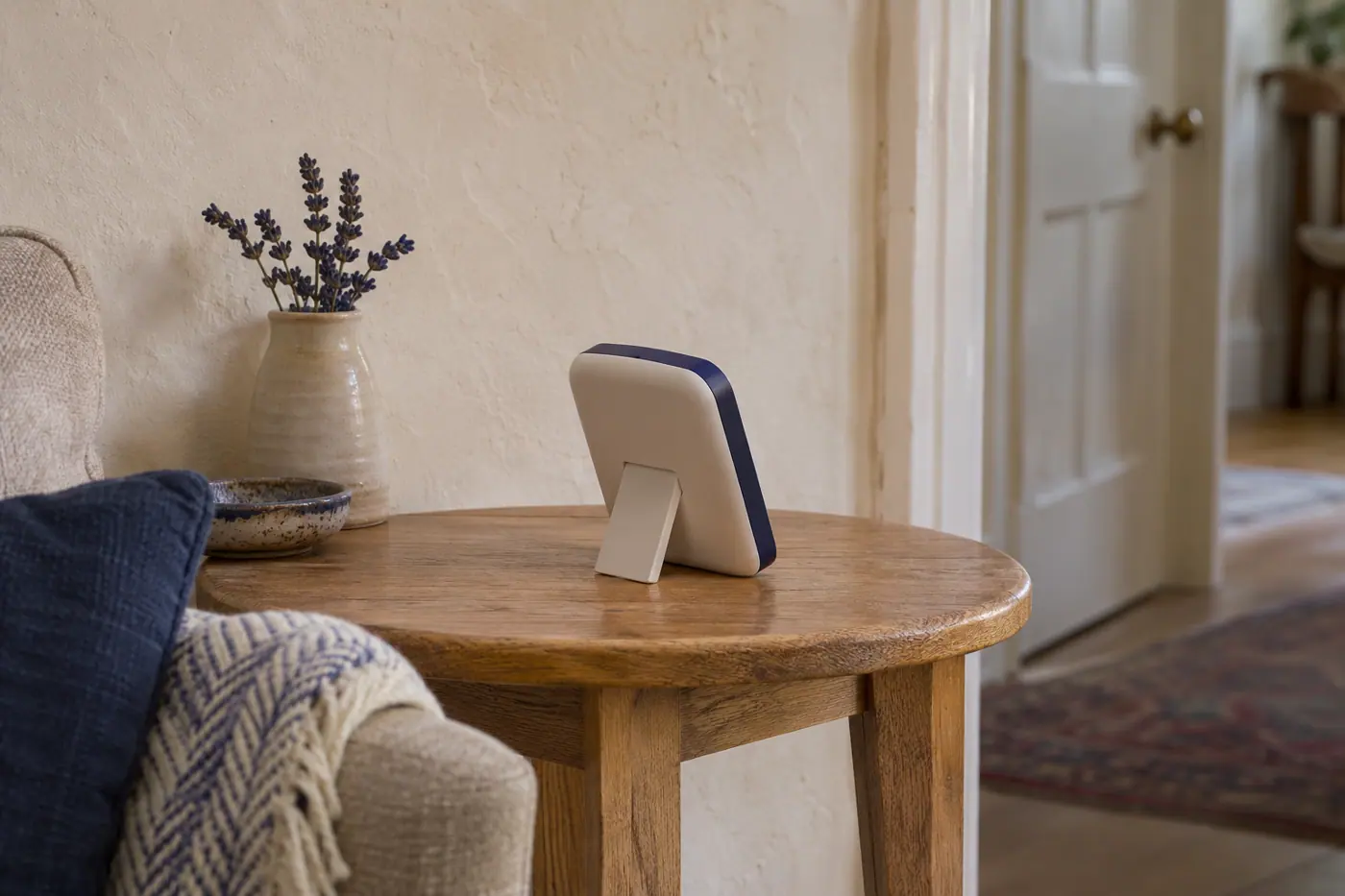
Put an air thermometer and hygrometer in the room away from a radiator, an open window or a direct plume from a shower. Allow them to settle as the instrument instructions describe. Take an appropriate surface reading at the reveal or pane you are assessing, and write down whether you used a contact probe or infrared method. Paint and glass have different measurement challenges. Treat a reflection as a reason to confirm the reading with a suitable independent method.
Work the example through
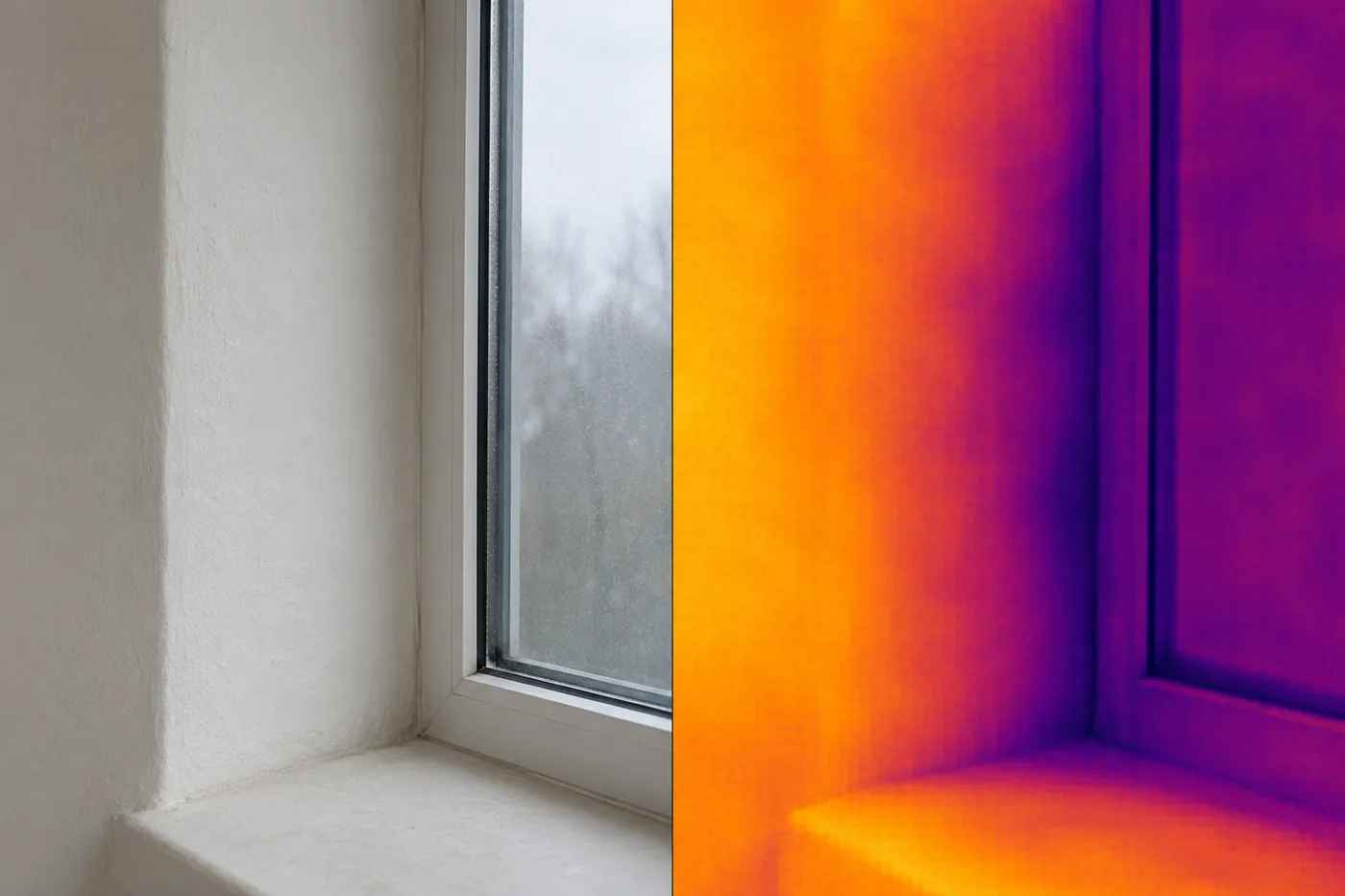
At 20°C air temperature and 65% relative humidity, the dew point is about 13.2°C. If a reliable reading on the reveal is 12°C at that time, the surface is about 1.2°C below dew point. Those conditions support surface condensation. When a reading is close to dew point, the accuracy of the instruments and changes in room conditions matter. Compare a second point and repeat when the moisture is most visible.
Record what happens over time
Use one entry before the room is warmed in the morning and one at a repeatable time later in the day. Include when cooking, bathing or a change in ventilation occurred if relevant. If water only follows heavy rain on a particular wall, keep that observation in the record and request an appropriate moisture check for a recurring problem. Where mould or persistent damp is visible, report it with dated photos and the location.
Questions about window condensation
Is 65% relative humidity proof of a problem?
The risk of surface condensation depends on the temperature and moisture conditions together. Check the surface and the time of day. Persistent visible damp deserves attention regardless of a single reading.
Can condensation happen when another room looks dry?
Yes. Surface temperature and local moisture conditions vary across the home, including near furniture and cold corners. Compare at the affected point.
Can I enter a glass temperature from the thermal camera?
Confirm the pane temperature using a suitable method before comparing it. Reflections or an unsuitable setting can bias the displayed value.