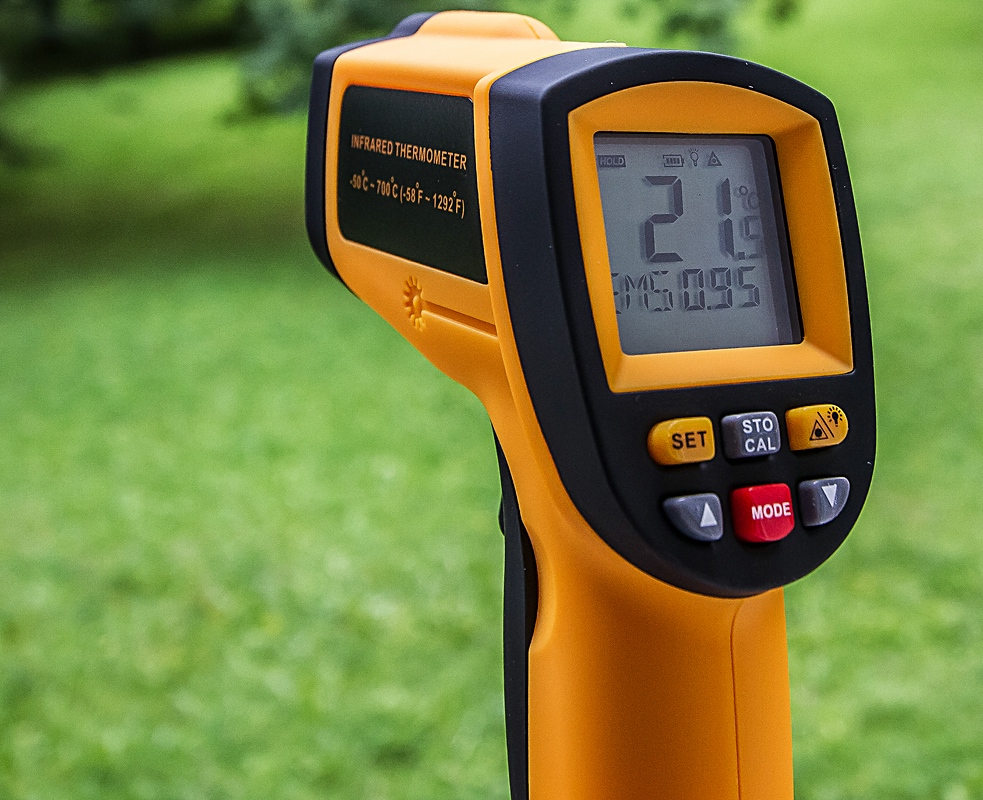
The reading is not simply the object's temperature
Emissivity describes how effectively a surface emits thermal radiation compared with an ideal blackbody. A reflective surface can return a significant contribution from its surroundings to the camera. Adjusting the emissivity setting changes the temperature calculation; it does not remove the reflected radiation.
Bare shiny metal is therefore a poor target for casual quantitative measurement. The image may include the reflection of a warmer person or a colder background. Surface finish matters: do not assume every object made from the same metal has the same emissivity.
Look for reflections before changing the numbers
If an apparent feature moves when the viewing angle changes, reflection is one possibility to investigate. Compare visible-light photographs and consider what the surface can reflect. Do not interpret a bright reflection as a physical hotspot without checking.
In a CNX review, a reflective CPU lid initially appeared unexpectedly cool. The author revisited the explanation and added a tape-assisted observation. The later observation also used different operating conditions, so its temperature difference is not a universal correction factor.
Use a suitable surface reference carefully
A suitable high-emissivity patch can make a surface easier to observe when it is safe to apply, compatible with the temperature and allowed to approach the surface temperature. Its emissivity and thermal behaviour still need to be understood.
Tape, paint or a contact sensor can change the surface or respond at a different rate. A casual tape experiment is not a traceable calibration. If a precise reading affects a consequential decision, use a suitable reference and a competent measurement procedure.
- Check surface finish and the camera's emissivity setting.
- Consider reflected surroundings, viewing angle and target size.
- Allow any applied patch to settle thermally before interpreting it.
- Compare like-for-like loads and times when repeating a test.
Report what you actually measured
Keep the settings, surface description, distance and operating condition with the image. If you only know that one region appears warmer than another, report that observation rather than inventing an accurate component temperature.
A published correction is stronger than hiding an awkward result. Keep the original observation visible and explain which evidence changed the interpretation.
Sources & evidence
Combines professional and manufacturer explanations with an author's documented correction. No emissivity value, tape method or calibration has been independently validated by us.
- CNX: Xtherm II TS2 review and measurement correctionExternal author’s report
- Fluke: Infrared thermometer measurement guidanceManufacturer guidance / statement
- RICS: Reflections in building thermographyProfessional guidance
This guide is based on published sources. We have not conducted the equipment or property tests described by other authors. Statements about compatibility and performance remain scoped to their recorded versions and conditions.
How we use evidence